As competition for talent intensifies and artificial intelligence reshapes the workplace, technology employers are increasingly recognising that culture is no longer a supporting function. It has become a strategic differentiator.
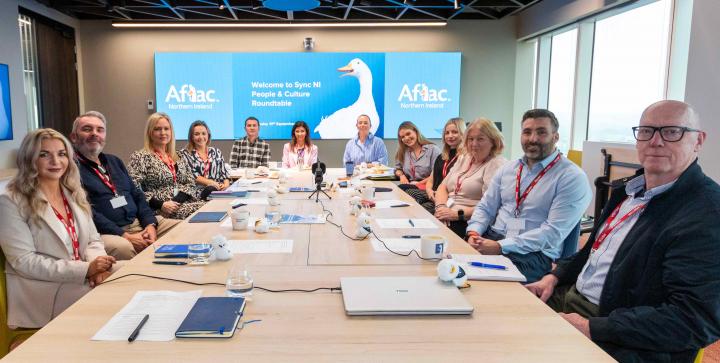
Sync NI hosted a roundtable event to bring together leaders from global technology companies, industry bodies and academia to discuss how aligning people, purpose and adaptability can help build organisational cultures and provide the best environment for high-performance teams to flourish.
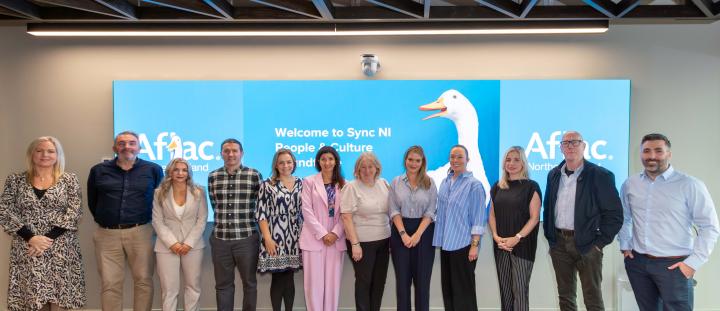
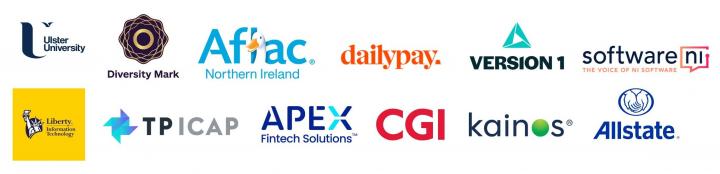
Gathered together in the boardroom of Aflac’s City Quays 3 Belfast offices Sync NI’s assembled panel of experts included Sarah Milliken Head of People and Culture Aflac; Suzi Murtagh Principle Digital Product Manager Allstate; Beverley Noye Site Lead TP ICAP; Joanne Ferguson Director Software NI; Professor Kristel Miller Ulster University and Commissioner Equality Commission, Paul Kiernan Director of Talent Liberty IT; Christine Whyte Diversity Mark; Lorna McAdoo Group Director ESG Version 1; Pete Wilson Digital Director and Programme Lead CGI; Anna Irwin, Head of Communications Kainos; Steph Murray Lead Technical Talent Partner DailyPay and Darren Abel Senior Director Engineering Apex Fintech Solutions


In a sector defined by constant change, attracting and retaining talent has become one of the most pressing challenges facing employers. While salary remains important, today's workforce evaluates employers across a much broader range of factors, including leadership, flexibility, wellbeing, career development and, increasingly, an organisation's approach to AI.
Throughout the discussion, participants explored what makes employers stand out, how high-performing teams are built and why culture has become one of the most valuable assets an organisation can possess. Despite representing diverse organisations, attendees shared a common view: people remain the most important driver of long-term success.
One of the strongest themes to emerge was the distinction between employer brand and company culture.Employer brand is the promise organisations make to prospective employees. Culture is the reality employees experience once they join.
Technology professionals today have access to more information than ever before. Through social media, professional networks, employee review sites and personal contacts, candidates can gain a realistic understanding of an organisation before applying. As a result, businesses have little room to overpromise and underdeliver.
Several participants noted that graduates and early-career professionals are particularly skilled at identifying gaps between marketing messages and lived experiences and attractive recruitment campaigns alone are no longer enough. Candidates want authentic insight from employees themselves. They want to understand the work, growth opportunities and day-to-day experience before committing to a role.
Authenticity therefore becomes essential. Rather than trying to appeal to everyone, many successful organisations are focusing on attracting individuals whose values, ambitions and ways of working align with their own. The objective is not simply to maximise applications but to attract people who are more likely to thrive within the organisation.
This reflects a wider shift in employer branding. Instead of projecting an idealised image, organisations are increasingly striving to provide an honest view of both the opportunities and challenges employees can expect. By doing so, they create stronger alignment between expectations and reality.
Participants also highlighted the growing influence of employee advocacy. In Northern Ireland's tightly connected technology ecosystem, word-of-mouth recommendations often carry more credibility than corporate messaging. Reputation is shaped not only by what organisations say publicly but also by what employees share through their own experiences.
While employer brand helps attract talent, culture determines whether that talent stays.Culture was described as the operating system of an organisation: an often invisible force that shapes behaviours, influences decision-making and defines how people experience work. Unlike benefits packages or policies, culture cannot simply be written down or implemented through a campaign. It is shaped by the behaviours organisations reward, tolerate and repeat.
Trust emerged as one of the most important foundations. Employees need confidence that leaders act with integrity, that their feedback matters and that commitments made during recruitment will be honoured. They also need the autonomy to perform without excessive oversight or bureaucracy.
Belonging was another recurring theme. Employees increasingly want more than a job. They want meaningful connections, recognition and a sense that their work matters. As hybrid and remote working become established, organisations must be more intentional about helping people build relationships and feel connected to colleagues and the wider mission of the business.Participants also observed that culture often becomes most visible during challenging periods. While positive cultures are easy to promote when conditions are favourable, it is during periods of uncertainty, pressure and change that organisational values are truly tested.
The conversation evolved into identifying the foundations of strong culture and several themes consistently emerged when discussing successful workplace cultures.The first was purpose. Employees want to understand why an organisation exists, what it is trying to achieve and how their own contribution supports that mission. A clear purpose creates direction and meaning.
Psychological safety was equally important. Employees must feel able to ask questions, challenge assumptions, share ideas and admit mistakes without fear of negative consequences. This is particularly important in technology environments where innovation depends on experimentation and learning.
Leadership accessibility was also identified as a key differentiator. Strong cultures are often characterised by leaders who are visible, approachable and willing to engage with employees directly. Whether through town halls, mentoring or informal conversations, employees value opportunities to understand leadership thinking and contribute to organisational discussions.Reducing hierarchy and encouraging open communication can strengthen trust and engagement while helping employees feel connected to decision-making.
The discussion highlighted a growing consensus across the technology sector: compensation may attract attention, but it rarely drives long-term retention on its own.Instead, employees increasingly assess organisations based on their overall experience.
Flexibility remains one of the most influential factors, but participants argued its meaning has evolved. While remote and hybrid working continue to matter, flexibility increasingly relates to autonomy, trust and the ability to balance professional and personal responsibilities.This is particularly evident among younger professionals entering the workforce, who expect employers to accommodate different working styles and life circumstances without limiting career progression.
Learning and development also featured prominently. As technology continues to evolve rapidly, employees recognise that ongoing learning is essential to remain competitive. Organisations that invest in skills development are therefore becoming more attractive employers.
Importantly, development extends beyond formal training courses. Employees increasingly seek opportunities to work on meaningful projects, engage with new technologies, collaborate across different teams and tackle complex challenges. Access to interesting work can be as influential as salary when evaluating opportunities.
The availability of modern tools and technologies also emerged as a significant factor. Technology professionals want access to up-to-date development environments, collaboration platforms and AI capabilities that enable them to perform at their best. Organisations that fall behind in this area risk creating frustration and weakening their attractiveness to top talent.
Community remains equally important. Employees increasingly expect organisations to support employee networks, diversity initiatives and opportunities to engage with causes that matter to them. What may once have been viewed as optional benefits are now considered important elements of a modern employee experience.
Building High-performing teams sit at the heart of every successful technology organisation, but participants challenged the idea that performance is driven solely by technical excellence.Instead, the strongest teams combine technical capability with trust, collaboration and shared purpose.
Clarity was identified as a critical starting point. Employees need to understand priorities, objectives and how their work contributes to wider organisational goals. Ambiguity creates friction; clarity creates momentum.Trust and psychological safety again emerged as essential ingredients. The most effective teams are those where individuals feel comfortable admitting when they do not know something, asking for help and constructively challenging established assumptions.
Participants also stressed the value of diversity. High-performing teams rarely consist of people with identical backgrounds or experiences. Instead, they draw strength from varied perspectives, skills and viewpoints.
Several attendees highlighted the particular value of early-career employees. New starters often bring fresh perspectives and ask questions that challenge long-accepted practices. Their curiosity can help organisations identify opportunities for improvement that more experienced colleagues may overlook.
Curiosity itself was repeatedly described as a competitive advantage. In an environment characterised by constant technological change, organisations need people who question, learn and adapt. A culture that encourages curiosity enables teams to respond more effectively to new challenges and opportunities.
Recognition also plays an important role. Many organisations represented at the roundtable actively create opportunities for employees to share achievements and celebrate successes. These practices not only strengthen engagement but also improve collaboration and visibility across teams.
The relationship between performance and wellbeing generated some of the most passionate discussion of the day.Historically, many organisations celebrated long hours, constant availability and relentless productivity. Increasingly, however, leaders recognise that these approaches are neither sustainable nor effective.Participants argued that wellbeing is not separate from performance. It is fundamental to it.
Employees experiencing chronic stress or burnout are less likely to deliver their best work, contribute innovative ideas or maintain long-term engagement. Sustainable performance requires healthy, supported employees.
Leadership behaviour is therefore critical and employees pay close attention to the signals leaders send through their actions. Whether leaders take annual leave, maintain healthy boundaries or prioritise important personal commitments can influence workplace norms throughout an organisation.When leaders visibly model sustainable working habits, they help create cultures where employees feel comfortable doing the same.
The role of managers was also emphasised. Even organisations with strong cultures can struggle when management practices are inconsistent. Conversely, exceptional managers often create highly positive experiences, even during periods of organisational challenge.Effective people management is becoming an increasingly important leadership capability. Managers must be able to prioritise work, create clarity, identify signs of stress and support employees through change. Simply driving output is no longer sufficient.
Participants suggested that burnout often results less from hard work itself and more from competing priorities, constant interruptions and a lack of clarity. Strong leaders help reduce these pressures by simplifying objectives and helping teams focus on what matters most.
No discussion about the future of work could ignore artificial intelligence.Participants acknowledged both its tremendous opportunities and significant challenges.AI has the potential to enhance productivity, accelerate learning and support better decision-making. Tasks that previously required hours of effort can increasingly be completed in minutes, allowing employees to focus on higher-value work.
At the same time, AI is prompting understandable questions about the future of careers and skills. Employees are asking which capabilities will remain valuable, how roles will evolve and what work will continue to require uniquely human strengths.
Rather than seeing AI as a replacement for people, many participants viewed it as a catalyst for role evolution. While technical expertise will remain important, organisations are likely to place increasing value on capabilities such as creativity, critical thinking, communication, judgement, emotional intelligence and ethical decision-making.
The speed of technological change was also a recurring concern. Unlike previous waves of innovation, AI is evolving rapidly and often unpredictably. For some employees, this creates anxiety about remaining relevant in the workforce.
As a result, continuous learning is becoming a strategic necessity rather than a desirable extra.Organisations best positioned for success will be those that create cultures of curiosity, experimentation and lifelong learning. Employees must have both the opportunity and confidence to develop new capabilities as technologies evolve.
Ethics also emerged as an important consideration. Participants suggested that responsible AI adoption could become a competitive advantage for organisations and regions alike. Businesses that demonstrate clear governance, transparency and accountability may be better positioned to earn trust from employees, customers and society.
As the discussion drew to a close, there was broad agreement about what will differentiate leading employers in the years ahead.Purpose will matter. Culture will matter. Leadership will matter. Learning will matter.
The strongest organisations will continue investing in people, even during periods of uncertainty. They will create environments where innovation is encouraged, development is supported and employees feel connected to meaningful work.
They will embrace technology while maintaining a strong focus on human experience. They will adopt AI while helping employees navigate change. And they will create inclusive workplaces where people from diverse backgrounds and perspectives can succeed.Above all, they will remain adaptable.
The organisations most likely to thrive will not necessarily be those that predict the future most accurately. They will be those that respond to change effectively, learn continuously and maintain trust throughout periods of transformation.
In conclusion, the roundtable highlighted a fundamental shift in how technology organisations view people and culture. Once considered supporting functions, employer brand, employee experience and workplace culture are now central to business performance and competitive advantage.
For Northern Ireland's technology sector, the challenge is not simply attracting talent but creating environments where people can thrive, develop meaningful careers and contribute at their highest potential.
READ MORE: AI Beyond the Hype: What Northern Ireland's Tech Leaders See Coming Next
As AI and other technologies continue to reshape the workplace, organisations will undoubtedly invest in new tools and capabilities. Yet the strongest message from the discussion was clear: technology alone will not determine future success.
In an increasingly automated world, qualities such as trust, belonging, empathy, curiosity and purpose may become more valuable than ever.
Technology will shape the future of work, but it will still remain the people that will continue to shape the future of great organisations.
Read the Autumn 2026 edition free online →
Stay connected with NI's tech community: