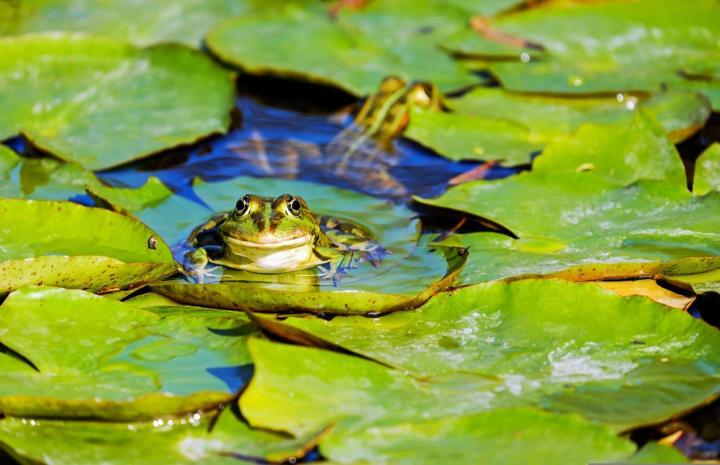
A new, global study led by Queen’s University Belfast reveals that tropical amphibians have evolved resistance to the most lethal wildlife pathogen recorded to date.
Chytridiomycosis is a devastating infectious disease, caused by the fungus Batrachochytrium dendrobatidis, or Bd, commonly associated with the alarming decline of amphibians worldwide.
These accelerating declines overtake the loss of most organisms on Earth, and this fungal pandemic disease, also referred to as a panzootic, is regarded as a predominant driver behind the massive global population declines and extinctions of frogs, toads, newts, and salamanders.
READ MORE: Momentum One Zero sod-cutting marks start of expanded facility at Queen’s Titanic Quarter
Published in the world-leading journal, Global Change Biology, the research compares previous data to more recent figures to examine the amphibian species infection status in tropical regions as well as in colder climates.
Dr Daniel Pincheira-Donoso from the School of Biological Sciences at Queen’s, the principal investigator on the project, said: “The idea that this infectious disease has been a dominant cause of the rapid loss of amphibian biodiversity has become a form of paradigm amongst the scientific community to produce volumes of data from thousands of species on a global scale.
“This collective effort created an opportunity for us to gather a comprehensive database spanning the global diversity of amphibian species, including the threatened and non-threatened, and all the thousands of species in which the presence of the disease has been tested. We now know that the role of this infectious disease in the extinction of amphibians is not exactly as we thought, with tropical species getting over the panzootic, while these panzootic effects are still ongoing in amphibians from colder climates.”
Dr Pincheira-Donoso adds: “An explanation is that the seasonality of colder climates added to the low density of amphibians in these regions may have acted as ‘natural lockdowns’ and ‘social distance’ effects that have made the impact of the pandemic slower, slowing down the evolution of their resistance.”
Many locations throughout the world have already been successfully invaded by one or more Bd variants, and these findings suggest that the most susceptible species have either already gone extinct or have undergone past declines and developed some form of tolerance to the disease. This means there is the potential that these amphibian populations may coexist with Bd, and that a once declining species may have stabilised in numbers or even be in recovery.
READ MORE: New seagrass meadow discovered in Northern Ireland by PhD student using DAERA technologyThis research indicates that there are region-specific and time-specific patterns of extinctions, with tropical amphibian species no longer experiencing declines of the same intensity and non-tropical amphibians continuing to decline further.
Luke Goodyear, a PhD Researcher from the School of Biological Sciences at Queen’s who led the research, commented: “This new research is very exciting as it shows two different ways this disease has affected amphibians. We see early signs of possible stabilisation in environments around the equator, which were initially hit very hard by the disease. Although many species are still at risk in these regions, it seems that the peak of devastation might be behind us.
“Then in colder climates, like Europe, we see the opposite. This is the first research to show the increasing impact on these amphibian species at this scale. Hopefully this can speed up conservation action while there is still time to prevent the mass declines we saw in tropical climates.”
The paper can be read in full here.
Sync NI's Autumn 2025 magazine explores how Northern Ireland is moving AI from pilot to production
This issue features exclusive insights from industry leaders on real-world AI implementation, responsible adoption, enterprise infrastructure, and how data-driven innovation is transforming businesses across the region.
Read the Big Data Special Edition free online →
Stay connected with NI's tech community:
Subscribe to our newsletter – Get the latest tech news, job opportunities, and events delivered to your inbox
Visit Sync NI – Your daily source for Northern Ireland technology news