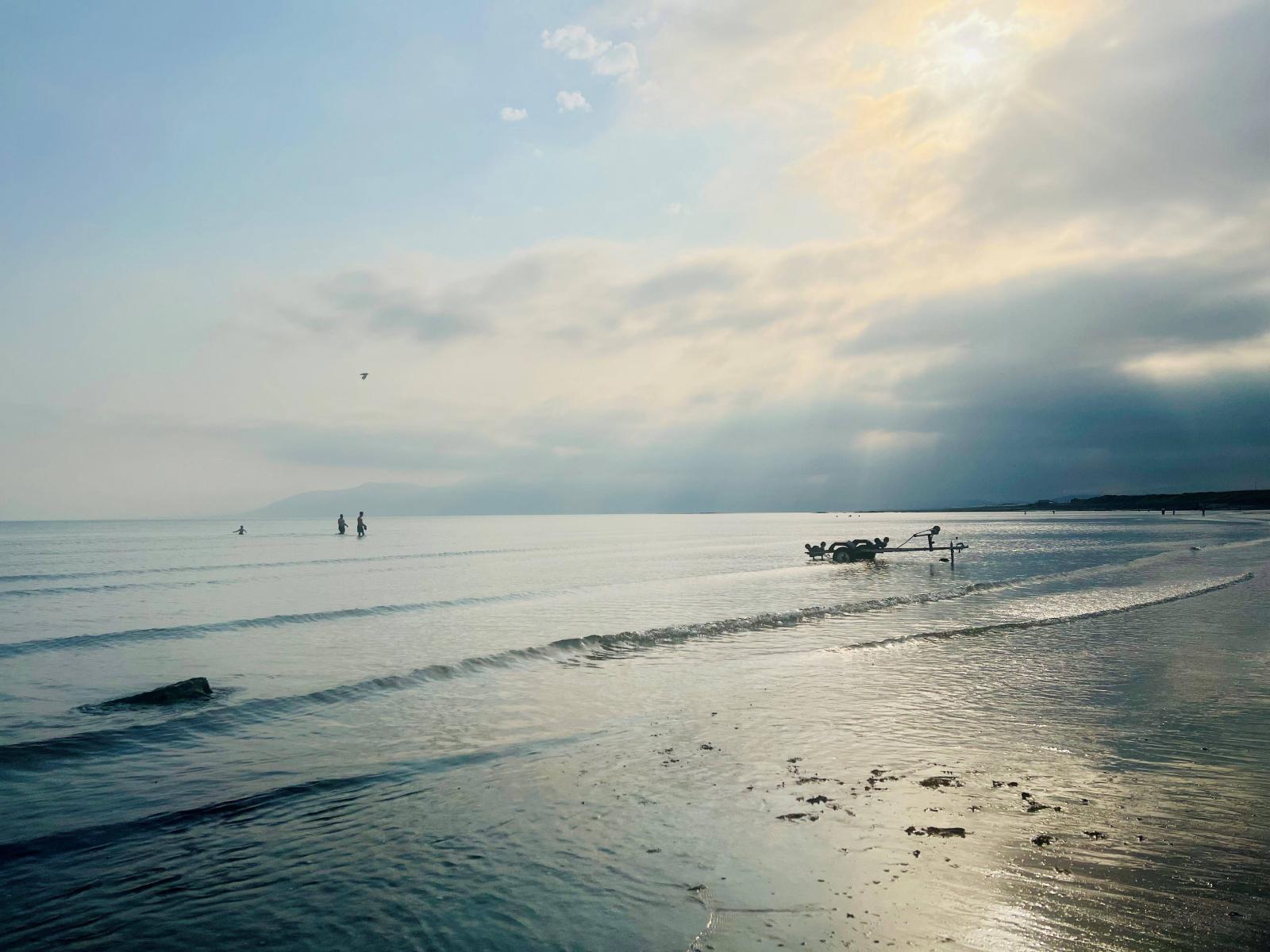
A new seagrass meadow has been discovered at Strangford Lough by a PhD student using DAERA technology.
Seagrass is an important marine habitat for storing carbon, known as a ‘blue carbon’ habitat, the preservation and restoration of which serves as a vital action in our response to climate change. Seagrass was once widespread throughout Northern Ireland’s shallow coastal waters, but like much of Europe, it has suffered significant losses due to coastal development, pollution, and disease.
Rebekah Bajkó, a Queen’s University Belfast doctoral student studying marine habitat restoration, was investigating the innovative remotely sensed data provided by the DAERA’s ‘Coastal Observatory’ data viewer and noticed a distinctive pattern in the tide-swept Narrows of Strangford Lough at Granagh Bay.
READ MORE: Belfast XR Festival launches new £200,000 creative development fund
She passed this information to a local diving club and they arranged a dive to see if her hunch was correct. Much to Rebekah’s joy, a lush seagrass meadow was found, and one of the divers, marine biologist Bernard Picton recorded a video of the meadow. This was then analysed by Dr Christine Morrow under the DAERA Environment Funded Queen’s Marine Biodiversity Data Portal NI project.
Upon further checks with DAERA, it was confirmed that this particular seagrass meadow, of the species Zostera marina, had never previously been recorded within the Strangford Lough Marine Conservation Zone.
Queen’s University Belfast PhD Student Rebekah Bajkó said: “I’m delighted to have contributed to this discovery and am really pleased that the technologies available to us are enabling such finds.”
READ MORE: Tourism NI supports NI Science Festival
Footage of the seagrass was featured in a segment about brent geese at Strangford Lough on BBC’s Winterwatch on Tuesday, which is broadcasting from Northern Ireland for the first time this week.
DAERA Minister Andrew Muir said: “I would like to commend Rebekah and everyone involved in confirming the presence of this previously unknown marine habitat. This is a really good demonstration of DAERA’s Coastal Observatory tool’s capabilities, showcasing how it can empower scientists, such as Rebekah, to pinpoint areas that warrant further investigation and conservation efforts.
“We must understand where our blue carbon habitats are in order to properly manage and protect them. This recent discovery of subtidal seagrass meadow in Strangford Lough contributes to the aims in my Department’s Blue Carbon Action Plan for Northern Ireland 2025-2030 by advancing knowledge of these critical ecosystems.”
Sync NI's Autumn 2025 magazine explores how Northern Ireland is moving AI from pilot to production
This issue features exclusive insights from industry leaders on real-world AI implementation, responsible adoption, enterprise infrastructure, and how data-driven innovation is transforming businesses across the region.
Read the Big Data Special Edition free online →
Stay connected with NI's tech community:
Subscribe to our newsletter – Get the latest tech news, job opportunities, and events delivered to your inbox
Visit Sync NI – Your daily source for Northern Ireland technology news