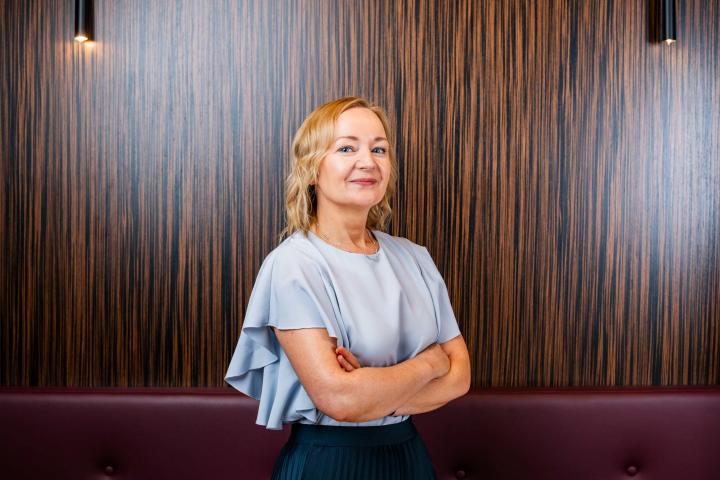
As technology evolves at unprecedented speed, the skills that organisations value are changing just as quickly. For Lisa Stevenson, Site Lead at Apex Fintech Solutions UK in Belfast, the future belongs to technology professionals who can think beyond their specialism, embrace AI as a core workplace tool and thrive in collaborative, high-trust environments.
Northern Ireland's technology sector has spent years building a reputation for technical excellence. Yet as artificial intelligence reshapes software development and organisations face growing competition for talent, technical expertise alone is no longer enough.
Adaptability, communication skills and cross-functional thinking are becoming just as important as technical capability. According to Lisa, the era of highly specialised professionals working in isolation is rapidly disappearing.

READ MORE: Identity at Risk: Why Cyber Security in Northern Ireland Must Rethink What It Protects
"Cross-functional expertise is central to how we build teams," she explains. "The days of pure specialists working separately from business, design or even customers are largely gone."
That shift is being accelerated by AI, and the way engineering teams are using it has moved on quickly. Rather than generative tools simply speeding up prototyping, the shift now is agentic: engineers increasingly direct and review AI agents carrying out substantial parts of the implementation itself, rather than writing every line by hand. Rather than creating larger specialist teams, organisations are increasingly looking for professionals who can set direction for that work, judge the quality of what comes back, and collaborate effectively across disciplines.
At Apex, this philosophy has influenced how teams are structured. Engineers are encouraged to develop an understanding of product thinking, business objectives and technical constraints rather than focusing solely on a narrow area of expertise.
"The engineers we want are people who understand product thinking, technical constraints and the business problem," says Lisa. "Increasingly, that means directing and reviewing AI agents rather than writing every line yourself. AI literacy is now very much part of that skill set."
In fact, she believes AI proficiency should now be viewed in much the same way as traditional digital literacy.
"It's becoming a baseline skill," she says. "Just like saying you're proficient in Excel, it's becoming important to say you're proficient in AI."
That focus extends beyond engineering teams. AI tools are being adopted throughout the organisation, with employees trained to use them as part of their everyday work. Lisa describes AI as an additional team member, helping staff access knowledge, solve problems and work more efficiently. The growing importance of T-shaped skills, where professionals combine deep expertise in one area with a broader understanding of adjacent disciplines, has particular relevance for Northern Ireland. With a smaller talent pool than larger technology hubs such as London or Dublin, she believes organisations must prioritise flexibility over hyper-specialisation.
"T-shaped skills matter much more in Northern Ireland because our talent pool is smaller," she says. "Building flexible, multi-skilled people is more realistic than trying to find specialists for every niche."
The expectation is not simply that employees acquire more skills, but that organisations deliberately create opportunities for them to broaden their experience. At Apex, for example, teams are encouraged to build knowledge across products and platforms, reducing reliance on individual subject-matter experts and creating greater organisational resilience.
Communication forms another critical part of that broader skill set. Lisa argues that the ability to translate technical concepts for non-technical audiences is increasingly valuable, whether explaining engineering constraints to business stakeholders or helping technology teams understand commercial objectives.
"Being able to communicate effectively across those groups is a hugely important skill," she says.
The changing skills landscape is also influencing expectations around careers, progression and workplace culture. While salary remains a major factor in attracting and retaining talent, Lisa believes both employers and employees need to adopt a more balanced and realistic perspective.
"I think both sides need to let go of some outdated assumptions," she says.
Employers, she argues, cannot always offer top-of-market salaries, maximum flexibility and rapid promotion opportunities simultaneously. Equally, employees should not assume that compensation and remote working alone will guarantee long-term job satisfaction.
Instead, successful employment relationships are built on transparency, trust and clear communication around trade-offs. For employers, that means providing fair and clearly benchmarked compensation, demonstrating a genuine commitment to employee development and being honest about organisational limitations.
Importantly, Lisa distinguishes meaningful career development from simply allocating training budgets.
"It's about stretch opportunities, mentorship and visible pathways forward," she explains. "Those things help people grow much more than simply providing a training allowance."
However, she also believes employees must take ownership of their own careers. Professional growth rarely follows a predefined timetable, particularly within an industry undergoing continuous transformation.
"Growth takes time and it isn't guaranteed on a fixed schedule," says Lisa. "Employees need to have ownership of their own development."
That responsibility extends to embracing change itself. As AI reshapes roles and automates certain activities, technology professionals must be prepared to continually evolve their skills.
"All we do in technology is change things," she says. "People should expect their roles, tools and skills to evolve, and they need to adapt alongside those changes."
The conversation around adaptability becomes even more significant when considering the future. Predicting technology five years from now is notoriously difficult, and Lisa readily acknowledges the challenge.
"Five years in technology is a very long time," she says. "Some of today's hottest tools will be obsolete, and there will be things we've never heard of yet."
Rather than focusing on specific technologies, she believes organisations should concentrate on building teams capable of absorbing constant change. The most successful companies, she predicts, will invest in developing adaptable people rather than continually searching for narrowly defined specialists.
That approach is particularly important in Northern Ireland, where organisations often compete for talent with employers in larger markets. The widespread acceptance of remote and hybrid working means local professionals can increasingly access opportunities with employers elsewhere without relocating. As a result, organisations cannot rely solely on compensation as their competitive advantage.
"There needs to be a genuinely compelling reason to work somewhere beyond pay," Lisa says.
For technology professionals, that often means the opportunity to solve interesting problems, continue learning, work flexibly and contribute within a culture that genuinely supports collaboration and growth.
Lisa firmly believes culture will become an increasingly important differentiator. As AI takes over more repetitive work, the skills that remain uniquely human will grow in value.
"AI will continue to take on repetitive tasks, but what's left is judgement, collaboration and creative problem-solving," she says.
Those qualities flourish in environments built on trust and psychological safety rather than command-and-control management structures.
READ MORE: The Human Touch: How One Fintech Firm is Keeping Engineers at the Centre of The AI Revolution
Finally, she highlights the importance of nurturing the next generation of talent. Supporting local skills pipelines, engaging with schools and increasing awareness of technology careers will be essential if Northern Ireland is to sustain its momentum as a leading technology hub.
For Lisa, the future success of both organisations and individuals will depend less on mastering a specific technology and more on developing the mindset required to continually learn, adapt and collaborate.
In an industry where change is constant, the most valuable skill may simply be the ability to embrace the next challenge before anyone knows exactly what it will be.
Read the Autumn 2026 edition free online →
Stay connected with NI's tech community: