
By Mark Hopkins, General Manager, Dell Technologies Ireland
AI is rapidly moving from experimentation to everyday workplace reality. Across Ireland, employees are already using it to summarise documents, analyse data and automate routine tasks.
Yet for many leaders and organisations, the real challenge is not access to the technology but turning AI into meaningful business value.
The organisations seeing the greatest impact from AI are those bringing three things together: strategic leadership, the right technology foundation, and a workforce empowered to identify where AI can genuinely improve how work gets done.
Northern Ireland’s evolving approach to AI adoption, including the establishment of the Executive’s Office of AI and Digital, reflects a growing recognition of AI as a driver of productivity and innovation. It also underscores the importance of investing not only in digital infrastructure but in the skills and capabilities that will enable organisations to adopt AI responsibly at scale
For business leaders in the region, the opportunity is significant, but so is the responsibility to build a clear and practical business case for AI.
Increased focus on the business case for AI
The conversation around AI is evolving at speed. What began as experimentation is now focused on a much more practical question: how can AI deliver measurable outcomes?
Across Northern Ireland, organisations are operating in a cost-conscious environment where every technology investment must demonstrate value. The strongest AI strategies therefore focus on specific business outcomes such as productivity gains, improved decision-making or enhanced customer experiences.
A common misconception is that AI adoption requires large scale investment and disruption. In reality, many successful initiatives begin with targeted use cases, such as automating routine processes, analysing data more effectively or improving customer interactions, that demonstrate value quickly and allow organisations to scale over time.
Workforce central to unlocking AI advantage
While technology provides the capability, it is employees who ultimately determine whether AI delivers real value.
Many of the most effective AI applications are discovered by employees who understand the day-to-day challenges within their roles. Teams in operations, finance or customer service are sometimes best placed to identify repetitive tasks that could be automated or improved through better data insights.
Equally important is ensuring employees feel confident using AI responsibly. Our latest Dell Innovation Catalysts Study shows the scale of this challenge. In fact, 98% of organisations say their employees will need new skills to unlock the full potential of AI.
As these tools become embedded in everyday workflows, organisations will need to move beyond occasional training and adopt more continuous approaches to learning. The Government’s commitment to roll out AI training across the public sector is welcome and will help drive responsible AI adoption and ensure 100% of key public services are digitalised by 2030.
The Government in Northern Ireland is committed to drive responsible AI adoption that will transform public sector delivery to meet citizens needs and foster essential digital skills to meet the demands of the future economy.
Leadership sets the tone for AI adoption
Leadership plays a crucial role in helping organisations move from AI experimentation to real business impact.
For many businesses in Northern Ireland, the challenge is not recognising AI’s potential, but unlocking value from the vast amounts of data they already hold. Leaders therefore have an important role in ensuring AI initiatives are tied to clear priorities and focused on turning data into insights that support better decisions.
From our perspective at Dell Technologies, organisations that treat AI as a business transformation rather than simply a technology deployment are the ones unlocking its real strategic advantage.
We are also beginning to see more advanced capabilities such as agentic AI, where intelligent systems can help coordinate workflows and support decision-making. As these technologies evolve, leadership will play an increasingly important role in ensuring organisations have the right strategy and governance in place to deploy AI responsibly and deliver value at scale.
The technology foundation still matters
While people and leadership are essential, the role of technology should not be underestimated.
AI workloads place new demands on infrastructure, including high-performance computing, secure data management and the ability to scale as projects grow. Many organisations in Northern Ireland are discovering that their existing IT environments were not designed to support these requirements.
At Dell Technologies, we work with organisations across Ireland and Europe to help them build AI-ready foundations that allow businesses to move from experimentation to real-world deployment.
Through our Customer Solutions Centre Innovation Lab in Limerick, businesses and organisations can explore how emerging technologies, including AI, can be applied to real business challenges. We are also seeing how these capabilities are transforming industries. For example, Dell Technologies is working with Studio Ulster to support one of Europe’s most advanced virtual production studios, enabling creative teams to generate complex digital environments in real time and transform how film and television content is produced.
Equally important is understanding the economics of AI. A practical cost model should consider factors such as computing power, energy consumption and data management to ensure AI investments align with real workloads and business needs.
A moment of opportunity for Northern Ireland
Northern Ireland Ireland’s unique digital ecosystem and skilled workforce position the region well to benefit from the next wave of AI innovation.
The Northern Ireland Executive’s AI and Digital Office provide an important regional roadmap. Yet achieving its vision of leading in responsible AI and revolutionising public services hinges on how government departments, industry and academia translate that vision into practical adoption across the economy
That means leaders creating the right environment for experimentation, employees identifying where AI can improve how work gets done, and organisations investing in the infrastructure needed to scale innovation responsibly.
Northern Ireland organisations that succeed will be those that bring people, leadership and technology together to turn AI potential into real progress.
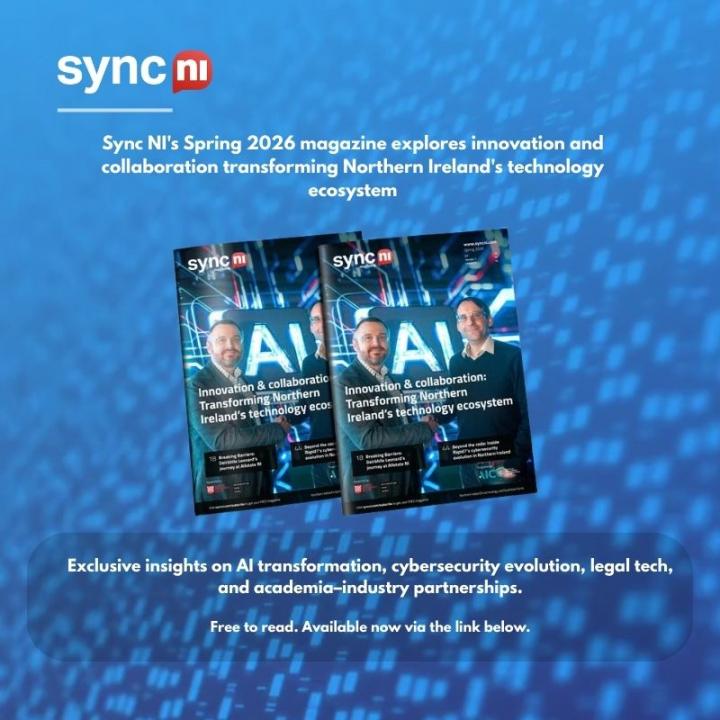
Read the Spring 2026 edition free online →
Stay connected with NI's tech community: