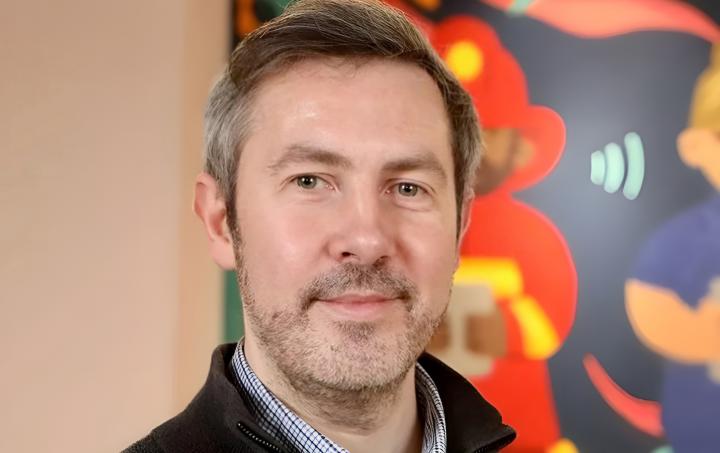
By Russell Beggs. Strategic technology executive with global, C-suite and board experiencescaling engineering organisations from start-up stage to enterprise scale
When I was asked to write for Sync NI on the topic of innovation and collaboration, my initial reaction was, “haven’t I done this before? shouldn’t I do something different?”. Then I wondered, what did I actually say over the years? What holds true and what is different?
The TLDR; on some of the things I said or wrote were around the importance of the environment, both physically and psychologically. I talked about creating physical spaces that were deliberately designed around the employee experience. How to ensure people have natural light, green spaces and separate spaces fostering collaboration independent of spaces that were calm and noise reducing/dampening so that creative and innovative thought can flow.
The crux of this is that research shows when we are threatened we get tunnel vision and move towards the fight/flight/freeze/fawn/flop response (turns out there are an increasing amount of fs). This causes us to be highly focused and prevents creativity. We’ve all experienced this and in a world where technology is more and more ambient and interwoven into everyday life. We process more information in a day than (allegedly) someone in the 15th century. Even if that’s not true, we can agree we consume a lot. It can be completely overwhelming and debilitating. Stress is also cumulative. It is like a bank account or credit card; the deeper into debt you get, the harder it is to get out. This is rarely the time where we go, “you know what, wouldn’t it be great if…?”
READ MORE: Deep Tech Spin-Outs and the Path from Research to Real-World Impact
At the same time, however, we have a (sympathetic and parasympathetic) nervous system that is bidirectionally regulated. When we get stressed, our breathing increases, our vision narrows. When we regulate our breathing or soften our focus, though, the converse is also true and helps us to destress. Imagine standing on a hill or mountain top looking out, able to see far, taking deep breaths and you can almost feel the relaxation. When we get our environment right, when we sleep, rest well and are relaxed then our memory, alertness, emotional regulation and cognitive ability all improve. That said, being overly relaxed leads to inertia. We need to be both relaxed and mildly stressed/engaged/excited to be at our best.
So, what on earth does any of this have to do with innovation and collaboration!? Mindset matters. Environment matters. If the foundations are unsound, innovation and collaboration is not possible or at best extremely suboptimal.
This makes me think of the macro environment. Everyone can probably agree that from a geopolitical and financial perspective it certainly feels like we’re in strange and unstable times.
Just this week I heard an anecdote where a highly respected technology and business leader asked an elderly neighbour for confirmation that we are living in the craziest of times (and to be fair it does feel that way). Her response; “I lived through the Cuban missile crisis”. She and I also regaled how COVID wasn’t that long ago and was certainly generationally crazy. Only a few years on, though, and it’s no longer at the front of our minds. I also wonder whether our local history here continues to have a residual impact. I don’t know. And we need to be careful of explanations becoming excuses.
My challenge to us all then is, are we unwittingly victims of our environment? What is in our control and not in our control? How do we respond rather than react?
I’ve noted some environmental tools to help already such as getting out into nature. Incidentally, ever notice how Victorian hospitals were placed beside parks? They knew there was a connection to wellbeing even if they may not have known precisely why. The things that help our physical health (sleep, diet, exercise), help our mental health. Mindfulness and meditation are the things that help differentiate elite athletes. Archimedes' eureka moment came when he got in a bath - something that helps with relaxation. In a crazy, chaotic, changing world if we want to innovate, frankly, we need a bit of self-care. Then we can have the right mindset to innovate and collaborate.
If we zoom out from those personal foundations, what does innovation and collaboration here look like? In some respects we appear to have lots of it. Looking at software and AI, there are bodies (communities) like SoftwareNI and the AICC (and several others). They both have bold and extremely admirable missions. Missions that aim to take our business ecosystem to great places. They have memberships that are growing and there are no shortage of events. It is clear a lot is happening. These are just two examples. There are several more.
At the same time, however, we need to be careful of unintentionally slipping into echo chambers and group think. The risk is in looking inward rather than outward. This week kicked off the Catalyst AI Hackathon in the Deloitte offices. What struck me was how diverse and excited the participants were. I am encouraged that we have diversity slowly building here because diversity of people leads to diversity of thought which leads to real innovation. The simple ideas that are only obvious in hindsight.
Therefore, to me, if the first step is self-care, then the second is related; recognising when we’re looking inward instead of outward, then engaging in the right, deep, challenging conversations about what we’re trying to solve and how we’re trying to solve it. That’s hard when we’re all extremely busy doing the day job. I have no doubt some may read this and disagree. But pushing through that difficulty is where I believe the greatest rewards are to be found. Otherwisewe’ll only ever make superficial change and impact.
READ MORE: Northern Ireland’s Next AI Leap: From Experimentation to Maturity
I recently heard a fellow Springboard mentor tell me how he had no idea what he was doing when he started his first company at the turn of the millennium. He was a trained accountant and wanted to build a new tech business. He reached out to the MD of a well-known, successful, indigenous software company. The MD connected him to his team of experts and they helped him bootstrap his fledgling company that became a successful company. Open collaboration - without the WIIFM (“what’s in it for me?”) - can lead to wonderful, exponential growth. Mindset matters. Environment matters.
Northern Ireland has the highest percentage of workers working in the public sector and the highest public spending per capita in the UK. Several of our successful private sector companies have revenue income coming from the public sector too. That is a huge opportunity for us to look outward and think differently about our place on a global stage.
On this island, great inventions have been borne and more can be. We have had an outsized impact globally and the world, as always, is changing radically and quickly around us. We need to recognise that, embrace that and adapt. We can have an even bigger outsized impact. But only if we hear that call and work together to make an impact that is larger than ourselves and truly make a difference. Innovation and deep collaboration is the key.
Sync NI's Spring 2026 magazine explores innovation and collaboration transforming Northern Ireland's technology ecosystem
This issue features exclusive insights from industry leaders on AI transformation, cybersecurity evolution, legal technology innovation, and how strategic partnerships between academia and business are accelerating real-world impact across the region.
Read the Spring 2026 edition free online →
Stay connected with NI's tech community: