How one of the world's leading cybersecurity firms is redefining engineering excellence in an AI-driven threat landscape
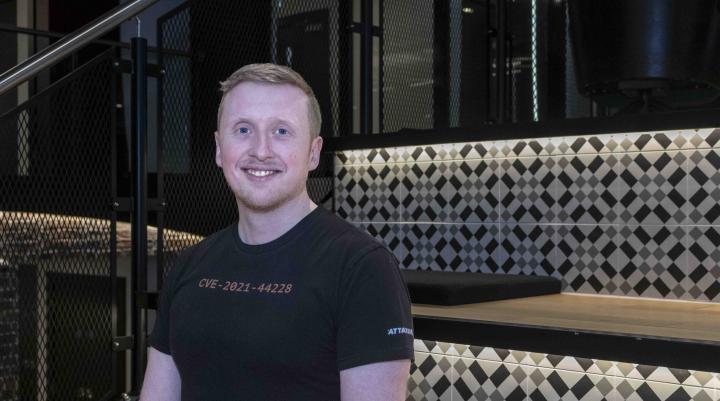
In the high-stakes world of cybersecurity, where artificial intelligence has transformed both attack and defence strategies, the role of software engineering has fundamentally shifted. Paul Hunter, Principal Software Engineer at global cybersecurity leader Rapid7, offers a compelling glimpse into this evolution and why Northern Ireland's tech talent should be paying attention.
Paul's journey from senior to principal engineer mirrors the broader transformation occurring across the cybersecurity sector. His role has evolved from building automated frameworks to designing entire ecosystems that determine how Rapid7 validates security at scale across multiple products. The distinction is significant: whilst senior engineers execute solutions for individual teams, principal engineers own the strategic vision, looking six to twelve months ahead and re-architecting frameworks ensuring they support future quality demands while simultaneously reducing risk profiles.

"My output is less about writing code and more about axial enablement," Paul explains. "It's about multiplying the impact of engineers across all levels and aligning engineering goals with business risk." This shift represents a crucial evolution in software engineering, one where technical excellence alone is no longer sufficient at senior levels.
READ MORE: Rapid7 roundtable event: ‘The people and the culture here are unmatched’
For more senior and experienced engineers, Paul identifies a critical non-technical skill that often catches professionals by surprise: consensus engineering. In his principal role, technical brilliance must be aligned with organizational influence.
"A perfect technical solution that no one adopts is an expensive hobby," Paul notes candidly. "I can't simply mandate new tools. You have to engineer an agreement between teams to ensure adoption." This requires understanding the conflicting goals and priorities of diverse stakeholders. While product teams are seeking innovation, security teams demanding robustness, and operations teams requiring stability my role therefore involves crafting solutions that satisfy enough of everyone's needs to gain momentum.
This revelation challenges conventional assumptions about senior technical roles. "I used to think the hard part was building the frameworks," Paul reflects. "But the hard part is actually aligning people to get behind those frameworks."
Perhaps nowhere is transformation more evident than in how artificial intelligence has reshaped engineering workflows. The most unexpected shift hasn't been simply building frameworks faster. AI has fundamentally altered the cognitive load facing engineering teams and the burden has shifted to verification of the components and solutions they create.
Junior and mid-level engineers now generate code at unprecedented speeds using tools like Copilot. However, this acceleration has introduced what Paul terms "implementation amnesia" where engineers understand what code is doing but not necessarily how and why it works that way.
"I treat AI-generated code like a third-party integration," Paul explains. "I trust it, but we verify it aggressively against edge cases." AI is trained on the happy pass, therefore it misses a lot of things, particularly around security. Unlike traditional vendors bound by contracts, AI bears no accountability, making verification the most expensive stage in modern development.
Paul draws a sharp distinction between AI as tactician and principal engineers as strategists. A mid-level engineer skilled at prompting AI represents an efficient tactician, capable of building components rapidly. Principal engineers, however, provide irreplaceable contextual awareness, addressing problems never explicitly mentioned.
Consider a seemingly straightforward task: crafting a Python script to parse log files. Whilst AI might deliver functional code quickly, a principal engineer asks the critical questions: What happens when log files exceed 50 terabytes? Does parsing potentially include personally identifiable information that violates GDPR? How does this affect cloud egress costs? Most importantly—should this solution exist at all?
"The value isn't just in the syntax," Paul emphasizes. "It's understanding how the system will break outside that code." Principal engineers provide guardrails around security, compliance, and architectural wisdom that prevent working features from becoming production incidents. In an age where AI can generate functional code at scale, this strategic oversight becomes increasingly valuable.
The adversarial nature of AI in cybersecurity has transformed the sector into what Paul describes as "hyper-speed chess." Attackers now leverage AI to generate polymorphic malware that changes signatures faster than traditional definitions can adapt. Large language models craft spear-phishing campaigns indistinguishable from legitimate communications.
However, the advantage cuts both ways. Rapid7 and similar organizations employ identical tools to build predictive defenses, analysing vast telemetry datasets to identify pattern anomalies humans would miss. The challenge has evolved from merely identifying threats to automating responses, because by the time human analysts review alerts, AI-driven attacks have already moved laterally through networks.
"We're entering an era where it's automation fighting automation," Paul observes. "Which is terrifying, but also quite interesting."
Looking ahead, Paul believes AI will have greater short-term impact than quantum computing on cybersecurity. Whilst quantum computing represents a looming threat, particularly for "harvest now, decrypt later" attacks where threat actors collect encrypted data for future decryption, it remains an infrastructure migration problem that can be planned for strategically. AI, by contrast, represents a chaotic, evolving adversary requiring immediate daily adaptation.
"AI is the fire; quantum computing is the earthquake that's going to hit later," Paul explains, capturing the distinction between urgent and impending threats.
For technology professionals in Northern Ireland considering their next career move, Paul's message is unequivocal: there has never been a better time to enter cybersecurity.
The global attack surface is expanding at unprecedented rates. AI tools enable individuals without engineering backgrounds to deploy websites and services within minutes. Whilst these tools generate functional code, they rarely produce secure code by default creating a flood of applications riddled with vulnerabilities.
Cybersecurity has evolved from an IT concern to a board-level business priority. The sector faces a structural global shortage, with industry data revealing a gap of nearly five million cybersecurity professionals worldwide. Unlike other areas facing budget constraints, security spending remains protected—companies simply cannot afford to reduce investment in protecting critical infrastructure and personal data.
For Rapid7's growing team in Northern Ireland, this translates into exceptional opportunities. The company needs engineers who can think strategically, navigate consensus across teams, and design systems resilient against rapidly evolving threats. The work directly impacts how organizations worldwide defend against attacks that evolve faster than ever before.
Paul's career trajectory demonstrates the possibilities available to those willing to grow beyond pure technical execution into strategic technical leadership. As Rapid7 scales its operations and expands its cloud infrastructure, the challenge isn't simply maintaining security, it's ensuring the risk profile doesn't increase alongside growth.
READ MORE: How Rapid7 and Queen's University Are Forging The Future For Cyber Security
The cybersecurity landscape that Rapid7 navigates represents the future of software engineering more broadly. As AI democratizes code generation, human expertise increasingly centres on strategy, context, and judgment, qualities that cannot be automated.
For Northern Ireland's technology community, Rapid7's expansion offers more than employment opportunities. It represents a chance to work at the intersection of emerging technologies, tackle problems of genuine global consequence, and develop skills that will define engineering excellence for decades to come.
In Paul's words: "You're helping defend critical infrastructure and personal data against a threat landscape changing faster than ever before." For engineers seeking meaningful work at the cutting edge of technology, there are increasing opportunities within the sector and the timing couldn't be better.
Sync NI's Spring 2026 magazine explores innovation and collaboration transforming Northern Ireland's technology ecosystem
This issue features exclusive insights from industry leaders on AI transformation, cybersecurity evolution, legal technology innovation, and how strategic partnerships between academia and business are accelerating real-world impact across the region.
Read the Spring 2026 edition free online →
Stay connected with NI's tech community: