Strategic partnership between academic and business-led innovation centres promises to transform the region's technology ecosystem through seamless collaboration
Northern Ireland's ambitions to become a global leader in artificial intelligence have taken a significant leap forward with a groundbreaking partnership that demonstrates how coordinated action between educational institutions and public sector bodies can accelerate technological advancement.
The Artificial Intelligence Collaboration Centre and Momentum One Zero have formalised a strategic alliance through a Memorandum of Understanding creating a "joined-up system" that addresses a critical challenge facing innovation ecosystems worldwide: the gap between academic research and commercial deployment.
READ MORE: Northern Ireland’s Next AI Leap: From Experimentation to Maturity
At its core, the partnership represents a pragmatic solution to a problem that has long hampered regional innovation efforts. Too often, businesses struggle to navigate fragmented support structures, unsure where to turn for help at different stages of their AI journey. This new framework promises to change that by creating clear pathways and eliminating duplication across Northern Ireland's technology landscape.
The collaboration brings together two organisations with distinctly complementary strengths. The AICC, a partnership led by Ulster University alongside Queen's University Belfast, focuses on grassroots support for small and medium-sized enterprises across key sectors. Its mission centres on helping organisations understand, adopt and implement AI technologies, with particular emphasis on building the skilled workforce the sector desperately needs.
Momentum One Zero, meanwhile, concentrates on research translation, advanced development work, and driving innovation-led solutions at scale. Backed by Belfast Region City Deal investment and Queen's University Belfast's internationally recognised expertise in cyber security, AI and wireless technologies, it operates at the cutting edge of technological possibility.
Together, they span the full innovation lifecycle. Any company with an idea can access world-leading research and technology development, then move seamlessly through to practical adoption, talent recruitment and commercial deploymentall within a coordinated ecosystem that knows how to signpost businesses to the right expertise at the right moment.
Perhaps nowhere is the partnership's potential more evident than in addressing Northern Ireland's skills challenge. The AICC is constructing a robust talent pipeline through 390 postgraduate scholarships while upskilling more than 3,000 professionals through its training programmes. This represents a substantial investment in human capital that will underpin the region's technological competitiveness for years to come.
The skills dimension is crucial, with both universities exploring more agile and flexible approaches to skills provision in a drive to meet industry need. Even the most sophisticated technology infrastructure means little without people capable of developing, deploying and managing it. By combining the AICC's educational focus with Momentum One Zero's advanced research capabilities, the partnership creates a virtuous cycle: companies can access both the innovation they need and the skilled workforce to implement it.
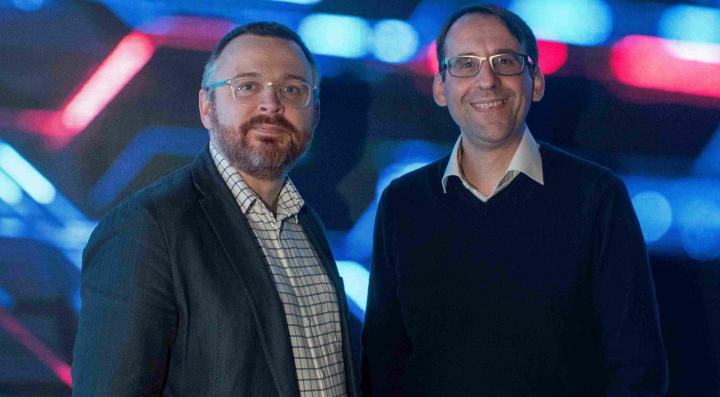
David Crozier, Director of the AICC, emphasises that this alignment ensures businesses can access the right expertise at the right time, whether they're early-stage enterprises or scaling companies ready for rapid growth. The system is designed to be responsive, recognising that a startup's needs differ vastly from those of an established firm looking to transform its operations through AI.
The pathway from academic research to commercial reality has traditionally been fraught with obstacles. Brilliant innovations can sometimes languish in university laboratories while businesses struggle with practical implementation challenges. This partnership explicitly targets that friction point.
Stephen McCabe, Executive Director of Momentum One Zero, describes the organisation's commitment to translating world-class research into solutions that deliver genuine economic and societal impact. The formalised partnership with the AICC creates what he calls "a powerful, unified pipeline from research to deployment"precisely the kind of integrated approach that transforms regional innovation from aspiration to reality.
The model is deliberately designed to be practical and accessible. Businesses will be guided toward minimal viable products, supported through implementation phases, and helped to achieve commercial growth. Crucially, companies will be directed to whichever organisation is best positioned to meet their specific needs, rather than facing bureaucratic confusion or territorial competition between institutions.
The partnership has garnered strong support from business leaders who understand the commercial imperative for clarity and coordination. Kathryn Harkin, Head of AI at FinTrU and Chair of the AICC Advisory Board, points to collaboration as Northern Ireland's fundamental innovation strength. She sees the agreement as evidence of a shared commitment to working strategically, transparently and purposefully.
Paul Murnaghan, representing BT Business in NI and chairing the Momentum One Zero Advisory Board, emphasises that businesses need a clear and coordinated innovation offer. The partnership delivers exactly that, creating what he describes as "a stronger, more connected pathway for industry engagement" that bridges cutting-edge research and practical implementation. His assertion that "the whole will be much richer than the sum of the parts" captures the multiplicative effect of genuine collaboration.
While the partnership concentrates on supporting Northern Ireland businesses, its architects have global ambitions. The agreement enables joint representation at international trade missions, showcasing the region's complete AI capability: research excellence, innovation support for business transformation, and a strong talent pipeline.
This international dimension is strategic. Northern Ireland competes on a global stage for investment, talent and recognition. By presenting a unified, coherent story about its AI capabilities, from fundamental research through commercial deployment, the region can differentiate itself in an increasingly crowded marketplace.
The partnership also offers a scalable and replicable model. Other UK regions facing similar coordination challenges could adapt this framework, while international partnerships become more feasible when there's clear understanding of who does what within Northern Ireland's innovation ecosystem.
One of the MoU's most significant contributions is the market clarity it provides. By clearly defining roles and responsibilities, the partnership eliminates the duplication that wastes resources and confuses potential users of innovation support. Businesses no longer need to navigate competing claims or overlapping services; they can focus on their core challenges while the ecosystem guides them efficiently.
This clarity extends beyond individual transactions. The partnership positions Northern Ireland to be more competitive internationally by demonstrating sophisticated coordination between educational institutions and business-focused innovation centres. In an era when regions compete for mobile investment and talent, the ability to offer seamless, joined-up support becomes a genuine differentiator.
READ MORE: Deep Tech Spin-Outs and the Path from Research to Real-World Impact
While the Memorandum of Understanding is non-binding, it signals serious intent by both organisations to work collaboratively and in good faith. The framework it establishes, combining research excellence, practical business support, talent development and clear pathways through the innovation journey, offers a template for how educational and public sector bodies can work together effectively.
The partnership's success will ultimately be measured not in agreements signed but in companies supported, innovations deployed, jobs created and Northern Ireland's enhanced reputation as a hub for responsible, impactful AI development. Early indications suggest both organisations understand this accountability and are committed to making collaboration work in practice, not just principle.
As artificial intelligence continues reshaping economies worldwide, Northern Ireland's deliberate choice to advance through coordinated action rather than competitive fragmentation may prove to be its smartest strategic move. The partnership demonstrates that when educational excellence meets business-focused innovation support, backed by substantial investment and clear leadership, regions can punch above their weight on the global technology stage.
Sync NI's Spring 2026 magazine explores innovation and collaboration transforming Northern Ireland's technology ecosystem
This issue features exclusive insights from industry leaders on AI transformation, cybersecurity evolution, legal technology innovation, and how strategic partnerships between academia and business are accelerating real-world impact across the region.
Read the Spring 2026 edition free online →
Stay connected with NI's tech community: