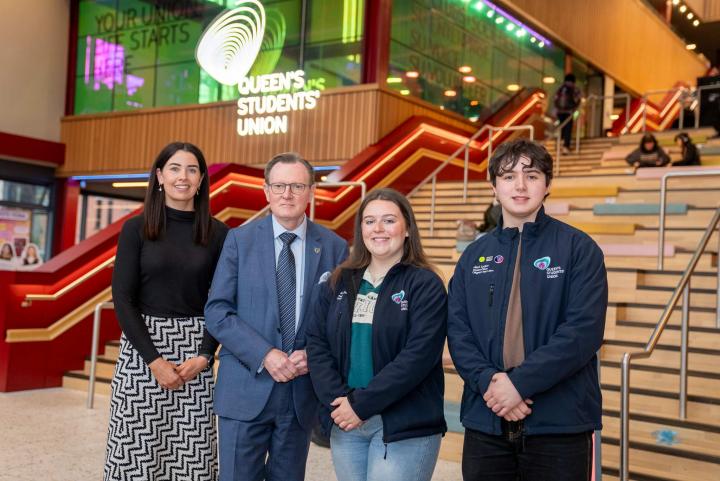
Queen’s University Belfast and Queen’s Students’ Union have become the first University and Students’ Union on the island of Ireland to receive official accreditation from Students Organising for Sustainability UK (SOS-UK), recognising their efforts in prioritising student wellbeing around drug and alcohol use.
The accreditation follows a two-year collaboration between the University and the Students’ Union since joining SOS-UK’s Drug and Alcohol Impact programme in early 2024.
This programme supports universities and students’ unions to embed harm-reduction principles and move beyond traditional zero-tolerance approaches. It aims to create a social norm of responsible alcohol consumption and refocus the conversation on drugs towards harm reduction, helping to build a safer, healthier and more informed student community.
READ MORE: ONEHEALTH: Turning cross-border research into real-world impact
While the University is clear that the use of drugs is illegal, it also recognises that with an increasing decline in young people’s mental health, coupled with well-evidenced links between mental health and substance use, the historical zero-tolerance approach to drug and alcohol use has been found to prohibit discussions and education that would support students.
Queen’s Students’ Union President Amy Smith said: “Taking a harm-reduction approach to alcohol and drugs is vital for the wellbeing of our students. It ensures they have access to clear information, education and the right support from both the University and Students’ Union.
“I’m proud of our involvement in this programme, which strengthens how the university responds to alcohol and drug use. It helps students enjoy themselves safely and responsibly, while reducing potential health, social and legal risks, and makes it easier for them to seek support whenever they need it.”
The Drug and Alcohol Impact accreditation is awarded following an audit process that assesses how well participating institutions have embedded harm-reduction strategies, developed supportive policies, and engaged students in harm-reduction education and resources. Accredited universities demonstrate a commitment to minimising harm associated with drug and alcohol use, providing stigma-free support, and ensuring students have the information and tools they need to make safe, informed decisions.
Since signing up to the programme, Queen’s and the Students’ Union have introduced a range of innovative initiatives designed to foster a culture of wellbeing and shared responsibility. These include enhanced student support services, harm-reduction advice drop-in sessions, updated harm-reduction-focused policies, and more alcohol-free events and social spaces in our accommodation sites and across campus.
Year‑on‑year survey data showed that Queen’s students are increasingly disagreeing that they feel pressure to drink more than they want – which SOS-UK say is clear evidence of a cultural shift on campus.
Professor Sir Ian Greer, President and Vice-Chancellor said: “Achieving this accreditation is a major step forward for our campus. It reflects the hard work of staff and students who have worked together to prioritise safety and wellbeing, reduce stigma, and support each other in navigating drug and alcohol-related risks.
READ MORE: Deep Tech Spin-Outs and the Path from Research to Real-World Impact
“As a civic university, we want to provide a safe space where our can openly discuss and fully understand the effects of drugs and alcohol, moving away from it being a taboo subject with a zero-tolerance approach.
“It was important for us to ensure that clear policies were in place to support and educate our students, giving them the knowledge they need to make educated decisions about their own health. The involvement in this programme has played a key role in helping us to achieve that.”
Queen’s participation in the programme followed a report launched by Universities UK which focused on tackling supply and demand for drugs and improving harm reduction. The report advised that higher education providers play a key role in helping students understand and navigate the risks of using drugs and encouraged universities to consider adopting the SOS-UK Drug and Alcohol Impact Programme.
Sync NI's Spring 2026 magazine explores innovation and collaboration transforming Northern Ireland's technology ecosystem
This issue features exclusive insights from industry leaders on AI transformation, cybersecurity evolution, legal technology innovation, and how strategic partnerships between academia and business are accelerating real-world impact across the region.
Read the Spring 2026 edition free online →
Stay connected with NI's tech community: