As global AI investment grew by 62% in 2025,for businesses in Northern Ireland, the question is no longer whether to embrace AI, but how quickly they can move from experimentation to transformation.
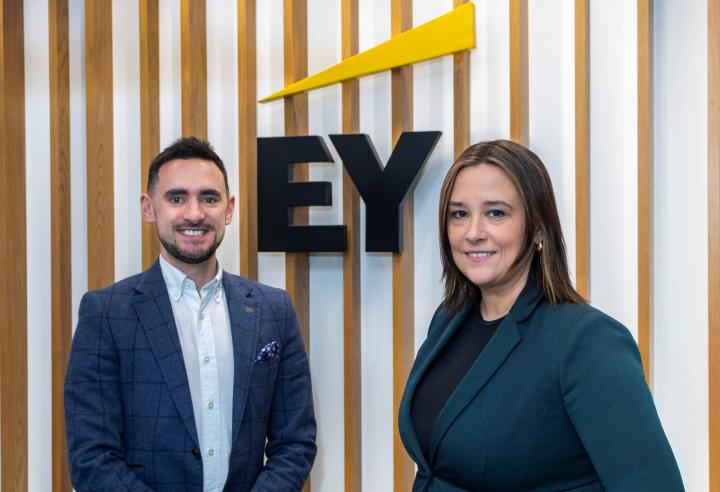
Sync NI sat down with Tim Cush, Partner at EY, and Rose Kane-Quinn, Senior Manager in Data, Analytics & AI,to discuss how AI transformation is reshaping business -moving from pilot projects into the core infrastructure of modern organisations.
"The biggest shift we're seeing is the transition from experimental AI projects to strategic integration into core business processes," explains Tim. "Companies are now prioritising AI not just as a tool for efficiency, but as a driver of innovation and competitive advantage."


READ MORE: Nominations now open for the 2026 EY Entrepreneur Of The Year™ programme
If 2024 was the year of Generative AI, 2025 marked the arrival of agentic AI – intelligent systems capable of carrying out complex, multi-step actions autonomously.
“What we’re seeing is the productisation of AI,” Rose explains. “It’s becoming part of the underlying business infrastructure.”
The practical applications are transformative. Imagine a customer contacting a company about a delayed order. Instead of being passed between departments, they interact with a single AI agent that can access order management systems, check shipping status, identifyweatherrelated delays and provide a comprehensive response — all in seconds.
Behind the scenes, multiple specialised agents may be working in concert, but for the customer the experience is seamless.
“That’s where we’re starting to see real transformation within organisations,” Tim notes. “The tools available on the market now make it easier than ever for businesses to start investing — often at relatively low-cost points.”
The barriers to adoption
For all AI's promise, the path to successful adoption is not without challenges. Timpoints towhat he calls "the data puzzle" – legacy systems, siloed platforms and fragmented data spread across multiple repositories.
There is also a widening skills gap. Organisationsdon’t just need technically strong data scientists; they need peoplewho understand business processes, industry context and how AI can be applied to real-world problems.
"It's not just about hiring a really sharp data scientist,"Tim explains. "They need to understand how the business works and where AI can genuinely add value.”
Governance presents another hurdle. With increasedfocus on ethics, policies and regulation – particularly the EU AI Act – organisations must tread carefully. However, Rose warns against allowing governance concerns to stall progress entirely.
"You can't wait until everything is totally perfect," she says. "You have to start assessing your infrastructure anddata estate, andtaking practical steps towards using AI within your organisation."
The message is clear: AI adoption should be approached like any other major transformation – moving forward in a controlled way while governance frameworks evolve in parallel.
Where AI is delivering value today
Some sectors are moving faster than others. Utilities companies, for example, are finding significant value in back-office operations such asdocument management and data governance – areastraditionally dominated by manual, time-consumingprocesses.
“Agentic AI can take over very manual, complex tasks in a sophisticated way,” Rose explains, drawing on recent work with a large utilities provider. “These processes often aren’t being addressed effectively, and AI is becoming the solution to what’s now a growing operational challenge.”
Financial services are continuing to evolve rapidly, but nowhere is the transformational impact of AI more profound than in the healthcare sector. AI is already transforming diagnostics, supporting personalised treatment pathways and helping reduce waiting times.
In healthcare, efficiency gains can mean far more than cost savings – they can represent the difference between timely intervention and dangerous delay.
Ethics, trust and transparency
With great capability comes greatresponsibility. EY's approach to AI is firmly grounded in ethics, trust and transparency.
While regulation such as theEU AI Act provides important guardrails, Rosehighlights the principle of “human in the loop” as critical.
“Users must always know when they’re interacting with AI,” she explains. “Transparency is fundamental — and there are important ethical considerations we have to remain conscious of at every stage.”
Timagrees, noting that while governance is essential, fear can become a blocker.
“There’s been a degree of hesitation in the market around beginning the AI journey,” he says. “But it’s possible to balance governance, ethics and policy with real momentum, — if you take a controlled, pragmatic approach.”
Northern Ireland’s opportunity
So where does Northern Ireland fit into this rapidly evolving AI landscape?
"Northern Ireland has a genuinely exciting opportunity," Tim says. "The ecosystem here - between startups, universities and investment through government and Invest NI - creates an environment where innovation can thrive."
The region's universities are producing exceptional talent, but there is a risk that too much of it is lost overseas.
“We’re missing a trick,” Tim continues. “We should be nurturing that talent locally and creating opportunities right here.”
EY is taking concrete steps to address this through Skills Academies and graduate programmes, many of which are open to people from non-traditional backgrounds.
“You don’t need a computer science degree to start,” Rose explains. “Our academies allow people to learn the fundamentals, apply their transferable skills and move into data and AI roles. It’s a brilliant way to widen access to these careers.”
This inclusive approach recognises that the AI revolution needs more than technical expertise alone – it requires business insight, creativity and the ability to connect technology with strategic value.
As 2026 unfolds, one thing is certain: agentic AI will dominate the conversation. AI is no longer experimental — it is becoming professionalised, scalable and embedded within business processes.
For organisations considering their next move, the window of opportunity is now. The tools are accessible, the talent pipeline is growing, and early movers will build advantages that compound over time.
The AI revolution isn’t coming.
It’s already here.
For more information about career opportunities with EY's data analytics team in Northern Ireland, including upcoming Skills Academies visit the EY careers portal.
Sync NI's Spring 2026 magazine explores innovation and collaboration transforming Northern Ireland's technology ecosystem
This issue features exclusive insights from industry leaders on AI transformation, cybersecurity evolution, legal technology innovation, and how strategic partnerships between academia and business are accelerating real-world impact across the region.
Read the Spring 2026 edition free online →
Stay connected with NI's tech community: