A Queen’s University researcher is helping to develop the world’s largest ever dataset for severe depression, which will span all four-nations of the UK.
The research has the potential to create a “paradigm shift” in how we understand, respond to and treat depression more effectively.
The project is being led by Professor Gerome Breen at King’s College London, Professor Cherie Armour from Queen’s University and researchers from the University of Edinburgh. They will also work in partnership with Cardiff University and University of Cambridge to develop an equivalent psychosis dataset.
READ MORE: Queen’s University gets ready to host more than 60 NI Science Festival events
The team will build on the existing Genetic Links to Anxiety and Depression (GLAD) study at King’s, which is already a world-first large longitudinal study that has collected tens of thousands of psychological, medical and genetic measures from people with anxiety and depression.
An additional 12,000 participants with recurrent, severe major depressive disorder will be recruited. The researchers will securely collect and integrate multiple types of biological information. This includes data on the complete human DNA (genome sequencing), which genes are switched on or off (epigenetic profiling), and other biological signals in blood that reveal health or disease (biomarker analysis). These measures will be combined with data from speech-based artificial intelligence, wearable devices, self-report psychological questionnaires, and medical records.
The new dataset will also integrate data from the Mental Health Mission Clinical Networks, and another 8,000-participant study for psychosis, aiming to include a total of 20,000 individuals.
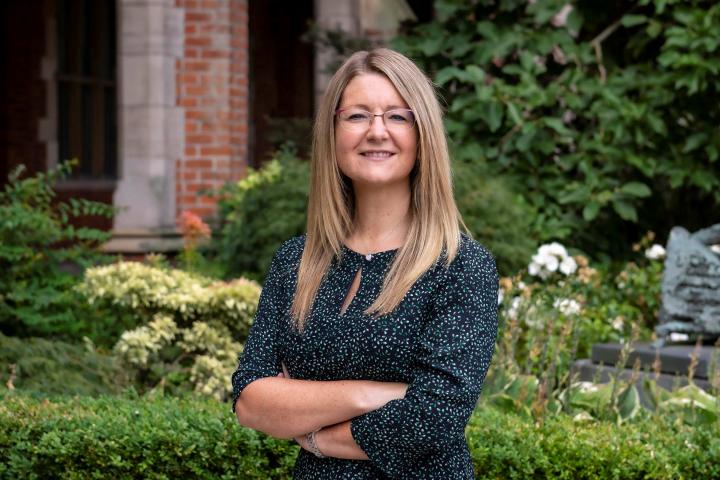
Professor Cherie Armour, Professor of Psychological Trauma and Mental Health, Queen’s University Belfast, is leading the research at Queen’s. She explains: “This award gives us a unique opportunity to study severe depression across all four-nations of the UK.
“We will be building on the world-leading GLAD study by continuing to collect bio-psycho-social data in addition to data from speech-based artificial intelligence, wearable devices and medical records to provide a much fuller picture of the risks and needs of those living with this condition."
READ MORE: Cancer leaders launch new plans to build an all-Island digital cancer research powerhouse
The Queen’s team will be focusing on psychological assessments – participants will complete questionnaires and these will allow the researchers to determine their psychological symptoms and if they are experiencing any psychological disorders.
The team will then study how these attributes interact with genetic, speech based, and behavioural data, as well as the information contained in medical records. This will provide a holistic overview of severe major depressive disorder.
The project is part of the government-funded Mental Health Goals Programme. This is a £50 million investment which aims to transform UK mental health research infrastructure and deliver real improvements for people affected by mental health conditions.
Sync NI's Autumn 2025 magazine explores how Northern Ireland is moving AI from pilot to production
This issue features exclusive insights from industry leaders on real-world AI implementation, responsible adoption, enterprise infrastructure, and how data-driven innovation is transforming businesses across the region.
Read the Big Data Special Edition free online →
Stay connected with NI's tech community:
Subscribe to our newsletter – Get the latest tech news, job opportunities, and events delivered to your inbox
Visit Sync NI – Your daily source for Northern Ireland technology news